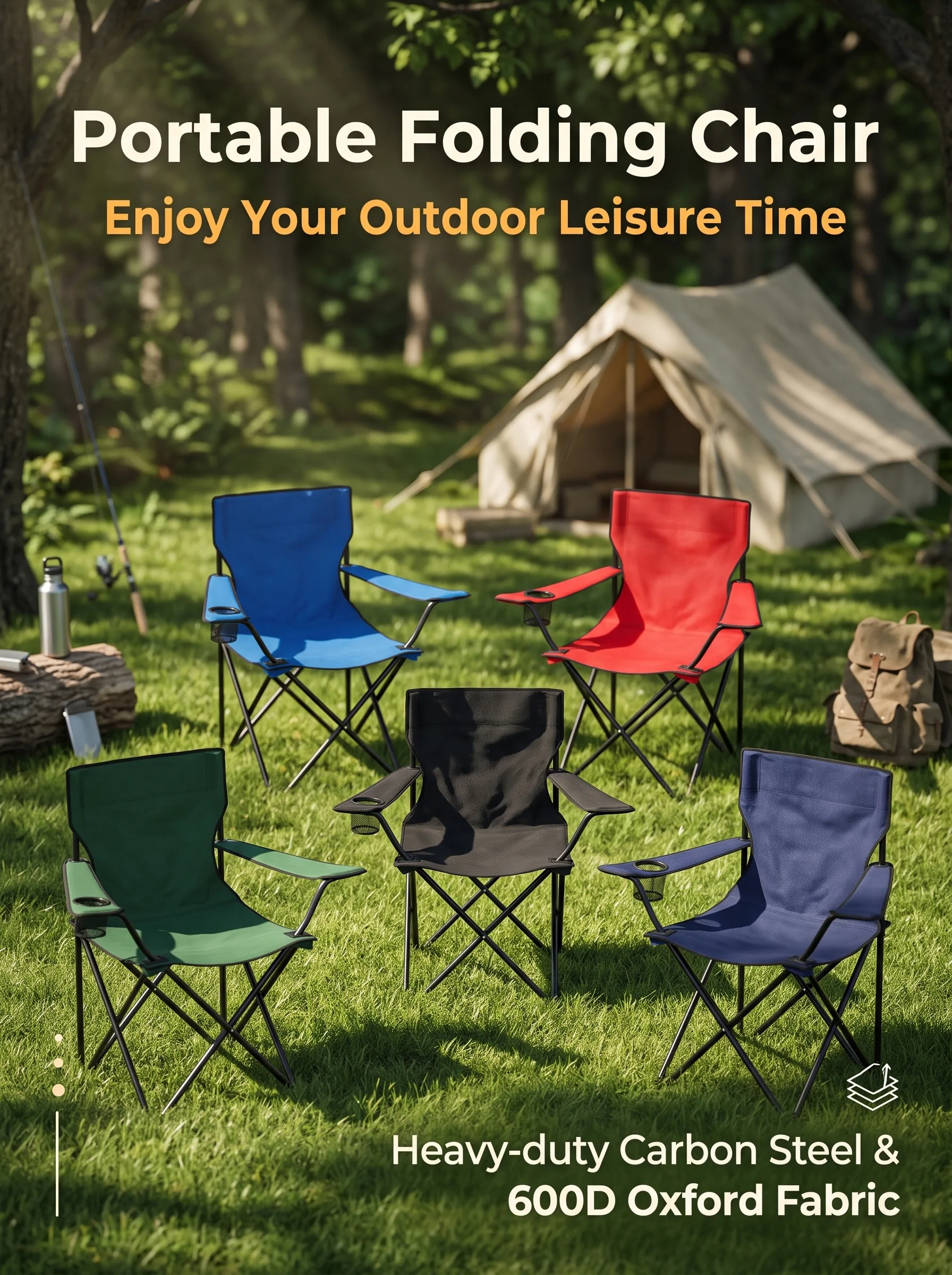
Weight: The Most Obvious Difference
If portability matters, aluminum wins by a wide margin.
| Frame Material | Average Weight per Chair |
|---|---|
| Aluminum alloy | 2.0–3.5 kg |
| Steel (powder-coated) | 3.5–5.5 kg |
Aluminum folding chairs are roughly 30–40% lighter than their steel counterparts. For backpackers and car campers who need to carry gear over distance, this is not a nice-to-have — it is a dealbreaker. A chair that weighs 2.5 kg versus 4.5 kg makes a noticeable difference after a mile of hiking.
Winner: Aluminum
Strength and Weight Capacity
Steel is denser and stronger than aluminum. Period. A steel-frame folding chair typically supports 150–250 kg (330–550 lbs), while aluminum frames max out around 120–200 kg (265–440 lbs).
For most campers and casual outdoor users, aluminum weight capacity is more than enough. But for commercial venues — event spaces, festivals, catering companies — where chairs see heavy daily use and need to support a wide range of users, steel higher load limit provides a safety margin that matters.
Winner: Steel
Rust and Corrosion Resistance
This is where the real-world differences emerge.
Aluminum naturally resists rust. It forms a protective oxide layer when exposed to air, which prevents corrosion from penetrating deeper. Even without coating, aluminum holds up well in humid, rainy, or coastal environments.
Steel rusts. Unless it is properly treated — through powder coating, galvanization, or stainless alloy — steel frames will corrode when exposed to moisture. Powder-coated steel offers solid protection, but once the coating chips or scratches, corrosion starts quickly.
For beach camping, lakeside use, or year-round outdoor storage, aluminum natural rust resistance is a significant practical advantage.
Winner: Aluminum
Durability and Lifespan
This one is more nuanced than most comparison articles suggest.
Steel frames are more resistant to impact damage — dents from dropping, stacking, or tossing into a truck bed. Steel rigidity also means less flex at hinge points over thousands of fold-unfold cycles, which translates to a longer structural lifespan in heavy-use scenarios.
Aluminum lower modulus of elasticity means it flexes more under load. Over time and repeated cycles, this can lead to permanent deformation — known as “frame creep” — at hinge joints. Thin-walled aluminum tubes are also more prone to denting from impacts.
However, for personal camping use where the chair is set up, used, folded, and stored carefully, aluminum chairs easily last 5–10 years without issues.
Winner: Steel (for commercial/heavy use) · Tie (for personal/casual use)
Comfort and Design Options
Both materials can be fitted with the same seat fabrics — polyester, textilene, canvas, or sling mesh. The frame material does not directly affect seating comfort.
However, steel offers more design flexibility. Steel tubing can be precision-bent into complex curves and elegant shapes, and it accepts premium powder coatings in a wide range of textures and colors. This is why most high-end event and hospitality folding chairs are steel.
Aluminum is mostly limited to simpler tubular shapes with standard anodized or powder-coated finishes. It looks more industrial and less refined.
Winner: Steel
Price Comparison
Steel folding chairs are generally cheaper to produce, especially at volume. The raw material costs less, and the manufacturing processes are well-established.
Aluminum chairs carry a price premium — typically 20–40% more than equivalent steel models — due to higher material costs and more specialized fabrication requirements.
That said, for camping and outdoor recreation, the price gap is narrowing as aluminum production scales up. Budget aluminum folding chairs from direct manufacturers now start at very competitive prices.
Winner: Steel
The Decision Matrix
Here is a quick guide based on your primary use case:
| Use Case | Best Material | Why |
|---|---|---|
| Backpacking / lightweight camping | Aluminum | Weight savings are critical |
| Beach or coastal camping | Aluminum | Natural rust resistance |
| Car camping / backyard BBQ | Either | Both work well for casual use |
| Event rental / commercial venue | Steel | Higher weight capacity, longer lifespan |
| Festival or catering company | Steel | Heavy-duty durability, better stacking |
| Glamping / boutique resort | Steel | Premium look, design flexibility |
Maintenance Tips for Both Materials
Aluminum Chairs
- Wash with mild soap and water after exposure to saltwater or sand
- Store dry — while aluminum will not rust, surface oxidation can develop
- Lubricate hinge pins annually to keep folding smooth
Steel Chairs
- Inspect powder coating for chips or scratches — touch up immediately
- Never store wet; trapped moisture under fabric straps accelerates corrosion
- Apply automotive wax to the frame annually for extra protection
- If rust appears, sand gently and reapply touch-up paint
The Bottom Line
There is no universally “better” material — only the better material for your specific situation.
Choose aluminum when weight and rust resistance are your top priorities. Choose steel when you need maximum strength, durability, and design versatility. Many commercial buyers actually stock both: aluminum for outdoor and wet environments, steel for indoor events and heavy-duty venues.
Looking for quality folding chairs for your next outdoor adventure or commercial project? GRIT offers both aluminum camping chairs and steel-frame folding chairs designed for real-world use. Browse our camping collection to find the right fit.
Planning a larger outdoor furniture project? Check out our camping and glamping sourcing guide for tips on choosing the right equipment for your business.
