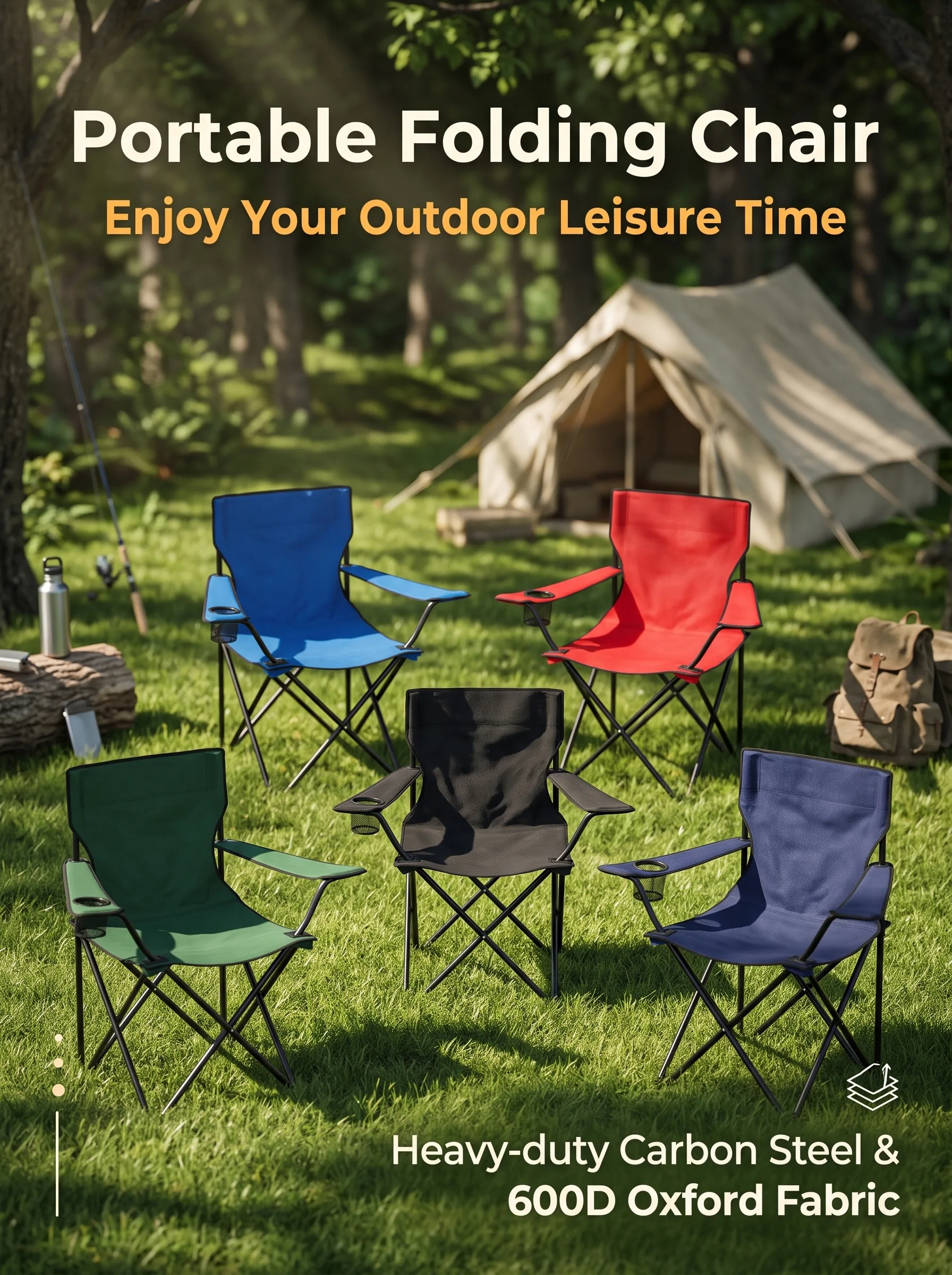
Why Frame Material Matters More Than You Think
When sourcing folding chairs — whether for a camping brand, event rental business, or outdoor retail line — the frame material is the single most impactful decision you will make. It determines weight, durability, corrosion resistance, load capacity, and ultimately, customer satisfaction. The two dominant choices are aluminum and steel, and each has distinct advantages depending on the application.
As a manufacturer based in Shengfang — China’s largest furniture production cluster — GRIT produces both aluminum and steel folding chairs at scale. This guide draws on real production data and B2B buyer feedback to help you make the right material choice for your market.
Weight: The Most Visible Difference
Aluminum’s biggest selling point is weight. A typical aluminum-frame folding chair weighs between 2.0 and 3.5 kg, while a comparable steel-frame chair weighs 3.5 to 5.5 kg — roughly 40–60% heavier. For camping chairs that need to be carried over distance, this difference is decisive. Backpackers and overlanders routinely choose aluminum frames because every kilogram counts on the trail.
However, for stationary applications — banquet halls, wedding venues, church fellowship meals — the extra weight of steel is actually a benefit. Heavier chairs feel more substantial, resist tipping in wind, and stack more stably during transport. Event rental companies often prefer steel for exactly this reason.
Corrosion Resistance: The Outdoor Reality Check
Aluminum naturally forms a protective oxide layer when exposed to air. This means it will not rust, even when left in rain, humidity, or saltwater environments. Anodized aluminum frames go further, converting the surface into a hard aluminum oxide layer that cannot peel or chip. For coastal resorts, poolside venues, and marine settings, aluminum is the default choice.
Steel, by contrast, will rust if its protective coating is compromised. However, modern manufacturing has largely solved this problem. A properly applied dual-layer system — e-coating (electrophoretic deposition) plus UV-grade powder coating — creates a barrier that easily withstands 1,000+ hours of salt spray testing. The critical vulnerability is at folding pivot points, where repeated use can chip the coating. Quality manufacturers address this with reinforced coatings at high-wear joints.
Bottom line: Aluminum wins for zero-maintenance outdoor use. Steel is perfectly viable outdoors when properly coated — but requires buyers to verify coating quality, not just take “powder-coated” at face value.
Strength and Load Capacity
Steel has a higher tensile strength (typically 400–550 MPa for carbon steel) compared to aluminum alloys (110–300 MPa depending on grade). This translates directly into load capacity:
- Steel-frame folding chairs: 150–300 kg (330–660 lbs), with heavy-duty models reaching 300 kg+
- Aluminum-frame folding chairs: 120–200 kg (265–440 lbs)
For commercial venues serving a general public — where you cannot control who sits down or how they sit — steel’s higher margin of safety matters. Many event rental operators specify a minimum 200 kg (440 lbs) rating, which is easier to achieve with steel at a lower price point.
Fatigue Life and Long-Term Durability
This is where the comparison gets nuanced. Aluminum has a lower modulus of elasticity, meaning it flexes more under load. Over thousands of fold-unfold cycles, this can lead to permanent deformation (“frame creep”) at hinge points and leg joints. A steel chair, being inherently more rigid, resists this type of fatigue better in high-cycle environments.
However, aluminum’s fatigue behavior is different from a safety perspective: it tends to deform gradually rather than crack suddenly. Quality aluminum chairs use reinforced nylon or stainless steel hinges to mitigate wear at pivot points. The real differentiator is manufacturing quality — a well-made aluminum chair from a reputable factory will outlast a poorly made steel chair every time.
Cost Comparison: Upfront vs Total Cost of Ownership
Raw material costs tell only part of the story. Here is how the economics actually break down for B2B buyers:
| Factor | Aluminum Frame | Steel Frame |
|---|---|---|
| Raw material cost (per kg) | Higher (~2–3x steel) | Lower |
| Finished chair cost | 15–40% higher | Baseline |
| Shipping cost (per container) | Lower (lighter = more units) | Higher |
| Replacement cycle | Longer in corrosive environments | Longer in high-cycle environments |
| Maintenance cost | Near zero | Coating touch-up may be needed |
| Customer complaints (rust) | Very rare | Occasional if coating fails |
For camping and outdoor retail, aluminum’s lighter weight also means lower shipping costs per unit — a significant factor when loading 40ft containers. A 40HQ can fit approximately 15–20% more aluminum chairs than steel chairs before hitting weight limits, partially offsetting the higher unit cost.
Application Matrix: Which Material for Which Market
| Application | Recommended | Why |
|---|---|---|
| Camping & backpacking chairs | Aluminum | Weight is paramount; corrosion from ground moisture |
| Beach & poolside chairs | Aluminum | Saltwater and chlorine resistance |
| Event rental / banquet | Steel | Higher load capacity; heavier = more stable; formal appearance |
| Wedding & gala seating | Steel | Aesthetics (chrome/gold plating); pairs with padded seats |
| Patio dining (residential) | Either | Aluminum for coastal; steel for inland with good coating |
| Festival & outdoor events | Aluminum | Portability for setup crews; weather resistance |
| Church & community halls | Steel | Durability under frequent folding; cost-effective bulk purchase |
The Hybrid Approach: Best of Both Worlds
Some manufacturers are now producing hybrid designs that combine aluminum legs and support structure with steel reinforcement at critical stress points (hinge mechanisms, load-bearing joints). This approach reduces weight by 20–30% compared to all-steel while maintaining the strength advantages at high-stress locations. These chairs typically sit in a premium price tier and are popular in the overlanding and car-camping segments.
What Buyers Should Verify Before Ordering
- For aluminum chairs: Confirm the alloy grade (6061-T6 or 7075 are premium; 6063 is standard). Check hinge material — it should be stainless steel or reinforced nylon, not plain carbon steel.
- For steel chairs: Ask for salt spray test reports (minimum 500 hours, ideally 1,000+). Verify coating thickness at pivot points. Confirm whether the coating is standard powder coat or the more durable e-coat + powder coat dual system.
- For both: Request samples and perform 500+ fold-cycle testing before placing bulk orders. Check weld quality at joints — this is where cost-cutting manufacturers cut corners.
Final Verdict
Neither material is universally superior. Aluminum wins on weight, corrosion resistance, and low maintenance — ideal for outdoor and portable applications. Steel wins on raw strength, load capacity, fatigue life, and cost — ideal for commercial and high-cycle indoor use.
The smart buyer matches the material to the specific use case rather than defaulting to one option. And regardless of material choice, manufacturing quality matters more than material grade. A well-made steel chair will always outperform a poorly made aluminum chair, and vice versa.
At GRIT, we produce both aluminum and steel folding chairs from our factory in Shengfang, China. Whether you need ultralight camping chairs or heavy-duty event seating, our team can help you select the right material specification for your target market. Contact us for samples and quotation.
