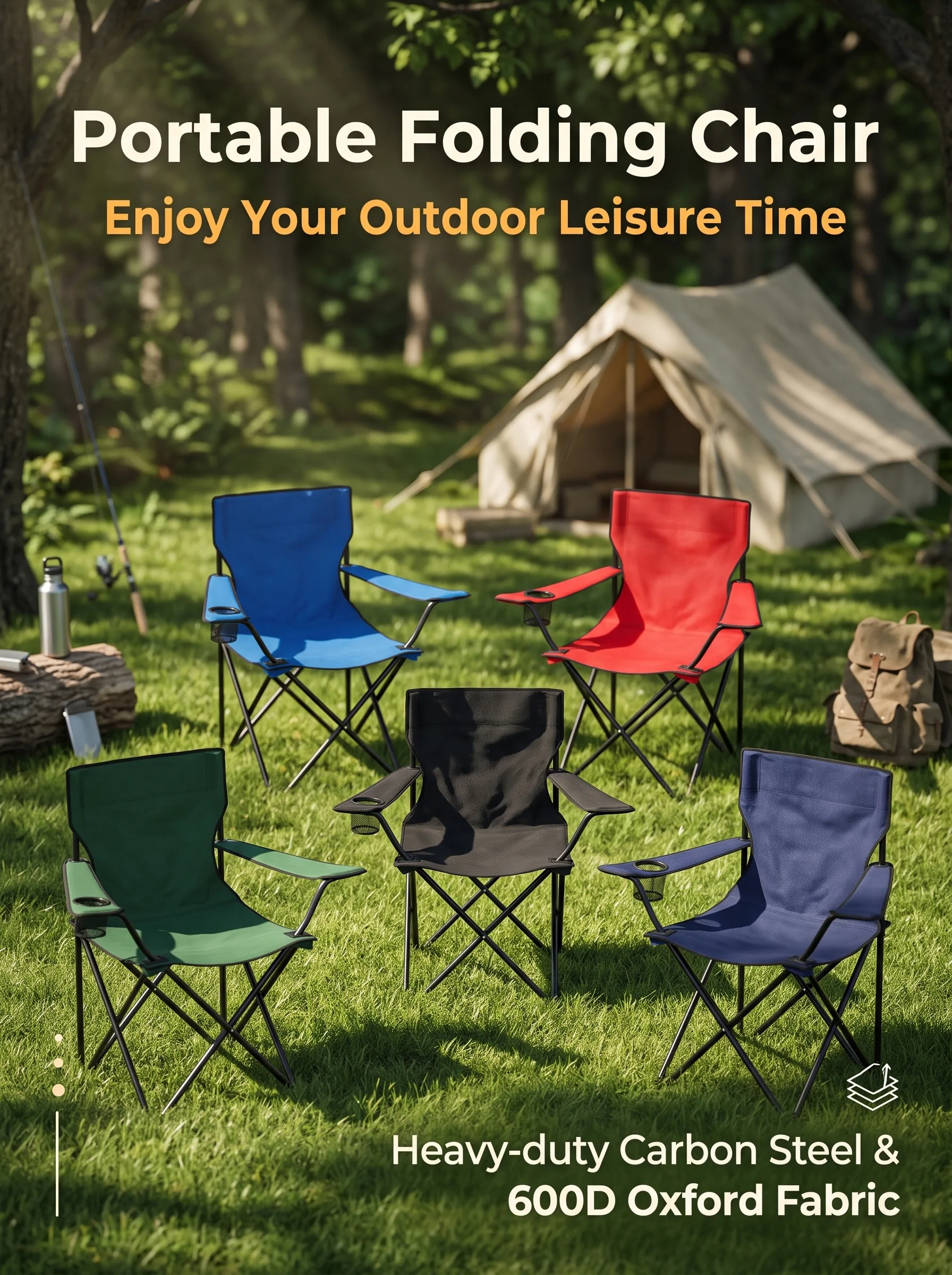
Aluminum vs Steel Folding Chairs: Which Material Is Right for Your Business?
Folding chairs are one of the most practical seating solutions for event venues, outdoor operators, and hospitality businesses. But when it comes to choosing between aluminum and steel frames, the decision has real implications for durability, maintenance, portability, and total cost of ownership.
This guide compares aluminum and steel folding chairs across the metrics that matter most to commercial buyers — so you can make the right choice for your specific use case.
Weight: The Most Visible Difference
The weight gap between aluminum and steel is substantial:
- Aluminum folding chairs: Typically 2.0–3.5 kg (4.4–7.7 lbs) per unit
- Steel folding chairs: Typically 3.5–5.5 kg (7.7–12.1 lbs) per unit
That’s a 30–40% weight reduction with aluminum. For businesses that frequently transport, set up, and store chairs — event rental companies, outdoor caterers, festival operators — this translates directly into labor savings. Fewer trips, less fatigue, faster setup times.
For stationary use (conference rooms, church halls, banquet venues), the weight difference matters less. Steel’s heft can actually be an advantage, providing stability that prevents chairs from shifting or blowing over in drafty spaces.
Durability and Load Capacity
There’s a persistent myth that steel is always stronger than aluminum. The reality is more nuanced:
- Steel has higher tensile strength — it can handle more force before deforming. A well-built steel folding chair typically supports 200–300 kg (440–660 lbs).
- Aluminum has a superior strength-to-weight ratio. A well-engineered aluminum folding chair supports 150–250 kg (330–550 lbs) at significantly less weight.
For most commercial seating applications, both materials provide more than adequate strength. The real question isn’t which is stronger in absolute terms — it’s whether the chair’s design, joint quality, and construction match your load requirements.
Key factors that matter more than material:
- Tube wall thickness (gauge) — thicker walls resist bending regardless of material
- Joint construction — reinforced pivot points prevent loosening over time
- Cross-bracing design — proper bracing distributes load and prevents wobble
Corrosion Resistance: The Deciding Factor for Outdoor Use
This is where the material choice becomes critical.
Steel: Coating-Dependent Protection
Carbon steel rusts when moisture and oxygen reach bare metal. Steel folding chairs rely entirely on their powder coat finish for protection. A quality powder coat — 60–80 microns thick, properly applied over pre-treated surfaces — creates a durable barrier. But:
- Folding pivot points are high-stress areas where coating chips and cracks over time
- Once the coating is compromised, rust begins quickly — especially in humid or outdoor environments
- Scratches from stacking, transport, or contact with other chairs create rust entry points
Aluminum: Inherent Resistance
Aluminum forms a natural oxide layer when exposed to air. This layer self-heals if scratched, providing ongoing protection against corrosion. Anodized aluminum goes further — the anodizing process converts the surface into a hard aluminum oxide layer that cannot peel or chip.
For outdoor use — patios, poolside, beach events, coastal venues — aluminum is the clear winner. It won’t rust even when stored in wet conditions, and it requires no maintenance coating over its lifetime.
Important caveat: Aluminum isn’t immune to all corrosion. In chloride-rich environments (salt air, coastal locations), pitting corrosion can occur, especially at joints where dissimilar metals (stainless steel fasteners) create galvanic coupling. Proper hardware selection and crevice control mitigate this risk.
Cost: Upfront vs Lifetime
| Factor | Steel Folding Chair | Aluminum Folding Chair |
|---|---|---|
| Unit Cost (typical) | Lower (15–30% less) | Higher |
| Expected Lifespan (indoor) | 5–10 years | 7–15 years |
| Expected Lifespan (outdoor) | 2–5 years (coating dependent) | 8–15 years |
| Maintenance Cost | Moderate (touch-up, rust repair) | Minimal |
| Transport Cost | Higher (heavier = more fuel/handling) | Lower |
| Replacement Frequency | More frequent outdoors | Less frequent |
For indoor-only use in controlled environments, steel offers a lower upfront cost with acceptable lifespan. For outdoor or mixed indoor-outdoor use, aluminum’s higher initial investment pays back through longer service life and near-zero maintenance.
Use-Case Decision Matrix
| Scenario | Recommended Material | Why |
|---|---|---|
| Indoor banquet hall (daily stacking) | Either — prioritize build quality | Corrosion risk is low indoors |
| Event rental company (transport-heavy) | Aluminum | 30–40% lighter = significant labor savings |
| Outdoor restaurant patio (non-coastal) | Aluminum preferred | No rust risk from rain or cleaning |
| Coastal or beachfront venue | Aluminum (anodized) | Steel will rust rapidly in salt air |
| Camping and glamping operations | Aluminum | Lightweight for transport, rust-proof outdoors |
| Budget-conscious indoor use | Steel (powder-coated) | Lower cost, adequate lifespan in dry conditions |
| High-traffic public venue (heavy users) | Steel (heavy-gauge) | Higher absolute load capacity |
What to Look for When Ordering
Regardless of material choice, verify these specifications before placing a bulk order:
- Weight capacity rating: Confirm it’s tested to a recognized standard (EN 581, ASTM, BIFMA) — not just a manufacturer claim
- Powder coat quality (steel): Ask about pretreatment steps, coating thickness (minimum 60 microns), and edge/weld coverage
- Finish type (aluminum): Anodized is superior to painted for outdoor longevity
- Joint construction: Riveted or bolted pivot points should be tight and smooth — no play or wobble
- Stacking rating: Commercial-grade chairs typically stack 8–15 high. Verify the rating matches your storage setup
- Foot caps: Non-slip, non-marring foot caps protect floors and improve stability
Maintenance Tips for Extending Chair Life
Steel folding chairs:
- Inspect quarterly for coating damage, especially at fold points and welds
- Touch up scratches immediately with matching touch-up paint to prevent rust spread
- Store indoors or under cover when not in use
- Avoid pressure washing — high-pressure water can force moisture into tube ends
Aluminum folding chairs:
- Wipe clean with mild soap and water — avoid bleach-based cleaners
- In coastal environments, rinse with fresh water periodically to remove salt deposits
- Check fasteners annually for signs of galvanic corrosion at joints
- Lubricate fold mechanisms with silicone spray once a year
The Bottom Line
There’s no universally “better” material — only the better choice for your specific application.
Choose aluminum if: you need lightweight portability, outdoor use, corrosion resistance, or lower lifetime maintenance costs. Ideal for event companies, camping operators, coastal venues, and anyone who transports chairs regularly.
Choose steel if: you need maximum load capacity at lowest upfront cost, primarily indoor use, and can commit to basic coating maintenance. Ideal for budget-conscious indoor venues, churches, and conference centers.
At GRIT, we manufacture both aluminum and steel folding chairs for commercial and outdoor applications. Our aluminum camping chairs feature anodized frames with EN 581 certification, while our steel event chairs use heavy-gauge powder-coated construction for maximum durability. Whether you’re outfitting a glamping site, an event rental fleet, or a restaurant patio, we’ll help you spec the right chair for the job.
Contact the GRIT team for product recommendations and bulk pricing.
