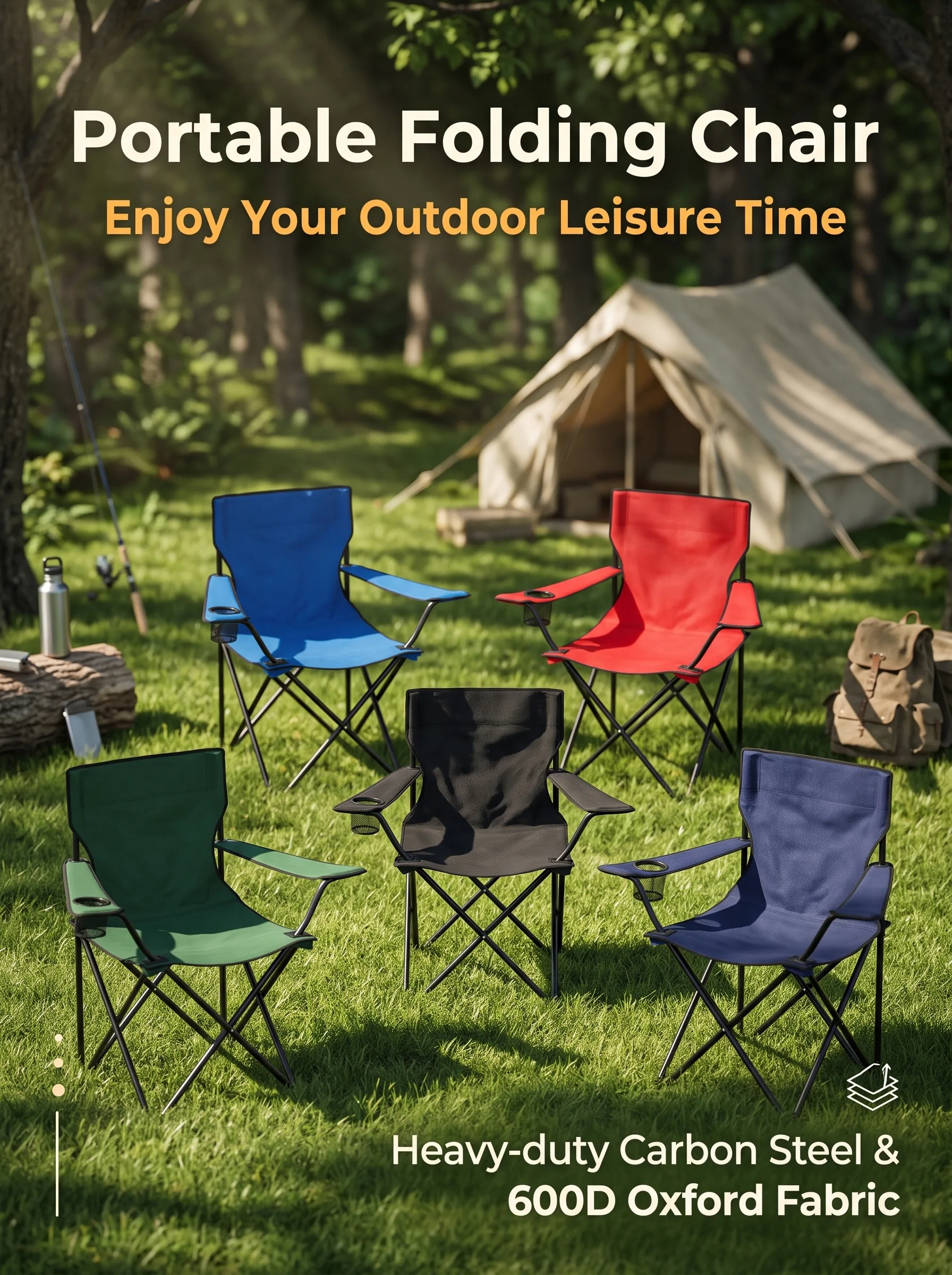
Why Weight Capacity Is the Most Important Specification You Are Probably Ignoring
When shopping for a camping chair, most people check the price, the folded size, and maybe the color. Weight capacity — the single most important safety specification — gets overlooked until something breaks. A chair collapsing under load is not just inconvenient at a campsite; it can cause serious injury, especially on uneven ground, near a fire pit, or on elevated deck surfaces.
This guide breaks down everything you need to know about camping chair weight capacity: how it is tested, what standards apply, why some chairs claim higher capacities than they can realistically handle, and how to choose a chair that will actually perform safely in the field.
As a manufacturer of outdoor and camping furniture, GRIT tests every chair model to destruction as part of our product development process. The data from those tests directly informs our rated capacities and product design decisions.
Understanding Weight Capacity Ratings
The “weight capacity” printed on a camping chair is the maximum static load the manufacturer claims the chair can support under normal use conditions. But not all ratings are created equal. Here is what you need to understand:
- Static load rating: The weight the chair can hold when loaded straight down in a seated position. This is what most manufacturers publish. Typical ratings range from 100 kg (220 lbs) for lightweight backpacking chairs to 200+ kg (440+ lbs) for heavy-duty models.
- Dynamic load: The force generated when someone sits down forcefully, shifts weight, or leans back. Dynamic loads can be 1.5x to 2.5x the static body weight. A 100 kg person sitting down quickly can generate 150-250 kg of instantaneous force on the chair frame.
- Safety factor: Reputable manufacturers design chairs with a safety factor of at least 2:1 — meaning the chair should withstand 2x its rated capacity before structural failure. A chair rated for 150 kg should not break until at least 300 kg of static load.
If a chair is rated for 120 kg but fails at 150 kg, the safety factor is only 1.25:1 — dangerously low. Always look for manufacturers that specify their testing methodology, not just the rated number.
How Weight Capacity Is Tested
There is no single global standard for camping chair weight testing, but several recognized test methods are used in the industry:
1. EN 581 (European Standard for Outdoor Seating)
EN 581-1:2015 covers general safety requirements for outdoor seating, including camping chairs. EN 581-2:2015 specifies test methods. Key tests include:
- Static load test: A 140 kg load (representing a 110 kg user plus safety margin) is applied to the seat for 10 minutes. No permanent deformation or failure allowed.
- Stability test: The chair is tilted to specified angles with loads applied to ensure it does not tip over.
- Durability test (fatigue): A 100 kg load is dropped onto the seat 25,000 times to simulate repeated use. The chair must remain functional without structural failure.
- Backrest test: A horizontal force is applied to the backrest to simulate reclining stress.
2. BIFMA X5.1 (American Standard for General-Purpose Chairs)
While BIFMA standards primarily target office furniture, many American outdoor furniture manufacturers reference BIFMA X5.1 test methods. Key relevant tests:
- Seat drop test: A 227 kg (500 lb) weight dropped from 152 mm (6 inches) onto the seat — simulates someone sitting down hard
- Backrest strength test: 890 N (200 lbf) applied to the backrest at specified points
- Seat durability test: 100,000 cycles of a seating load applied at a defined rate
3. Manufacturer Internal Testing
Many manufacturers (including GRIT) develop internal test protocols that exceed standard requirements. Our typical protocol for camping chairs includes:
- Static destruction test: Load applied incrementally until failure. Record the failure point and calculate actual safety factor.
- Dynamic sit-down test: 100 kg weight dropped from 300 mm height onto seat, repeated 5,000 times.
- Side-impact test: 50 kg lateral force on backrest to simulate someone bumping or leaning heavily.
- Joint stress test: Focus on rivet points, hinge connections, and fabric attachment — the most common failure points.
What Determines a Chair’s Weight Capacity
A camping chair is a system — every component contributes to the overall strength. Here are the key factors, ranked by importance:
1. Frame Material and Tube Diameter
| Frame Material | Typical Tube OD | Wall Thickness | Max Practical Capacity | Weight |
|---|---|---|---|---|
| Carbon steel | 19-25 mm | 0.8-1.2 mm | 150-200 kg | Heavy (3-5 kg) |
| Aluminum alloy (6061-T6) | 22-28 mm | 1.0-1.5 mm | 120-180 kg | Light (1.5-3 kg) |
| Stainless steel (304) | 19-22 mm | 0.8-1.0 mm | 130-160 kg | Medium (2.5-4 kg) |
The frame is the primary structural element. Larger tube diameter and thicker walls increase strength but also add weight. Steel is strongest per unit volume but heaviest; aluminum offers the best strength-to-weight ratio for backpacking applications.
2. Joint and Connection Design
The weakest point in most camping chairs is not the tube — it is the connection between tubes. Common joint types ranked by strength:
- Welded joints: Strongest. Common on car-camping and heavy-duty chairs. Welds must be full penetration with no porosity.
- Riveted joints: Good strength, lightweight. The most common joint on mid-range camping chairs. Rivet diameter and material (steel vs. aluminum) directly affect capacity.
- Pin/clip joints: Lightweight, easy to assemble/disassemble. Common on ultralight backpacking chairs. Lower capacity ceiling due to stress concentration at pin holes.
- Shock-cord (elastic cord) connections: Used in ultralight designs (like tent poles). Lowest structural strength but lightest weight.
3. Seat Fabric and Attachment
The seat fabric must support the user’s weight and transfer loads to the frame. Key specifications:
- 600D Oxford polyester: Standard material. Tensile strength ~200 kg. Adequate for chairs rated up to 120 kg.
- 1000D Cordura nylon: Premium material. Tensile strength ~400 kg. Used on heavy-duty chairs rated 150+ kg.
- Textilene mesh: PVC-coated polyester mesh. Breathable, quick-drying. Strength depends on weave density; typically rated 100-150 kg for seating applications.
- Attachment method: Sewn sleeve (fabric threaded through frame tube) is strongest. Riveted attachment is second. Clip/snap attachment is weakest and should be avoided on chairs rated above 100 kg.
Weight Capacity vs. Chair Category
Here is a practical guide to expected weight capacities by chair type:
| Chair Category | Typical Rated Capacity | Frame Material | Chair Weight | Best For |
|---|---|---|---|---|
| Ultralight backpacking | 80-100 kg (176-220 lbs) | Aluminum, shock-cord | 0.5-1 kg | Solo backpackers, thru-hikers |
| Standard backpacking | 100-120 kg (220-265 lbs) | Aluminum, pin joints | 1-2 kg | General camping, hiking |
| Car camping | 120-150 kg (265-330 lbs) | Steel, riveted | 2.5-4 kg | Drive-up campsites, tailgating |
| Heavy-duty / oversized | 150-200 kg (330-440 lbs) | Steel, welded | 4-7 kg | Larger users, extended use |
| Director’s chair / lounge | 120-180 kg (265-397 lbs) | Steel or aluminum | 3-6 kg | Camping, patio, events |
Red Flags: When Weight Ratings Are Misleading
Not all weight capacity claims are reliable. Here are warning signs that a chair’s rating may be inflated:
- No testing standard mentioned: If the manufacturer does not specify which test method was used (EN 581, BIFMA, or equivalent), the number may be a marketing estimate rather than a tested value.
- Ultralight chair claiming high capacity: A 600-gram chair rated for 150 kg is almost certainly overrated. Physics does not allow it — the frame material cannot provide the necessary strength at that weight.
- Thin-wall aluminum with high ratings: Aluminum tubes with wall thickness under 1.0 mm are unlikely to safely support more than 100 kg regardless of diameter claims.
- No safety factor disclosure: A responsible manufacturer states the safety factor used in their rating. If only the max capacity is listed with no margin information, assume the actual safe working load is 20-30% lower.
- Suspiciously low price for claimed capacity: Engineering a genuinely strong chair costs more in materials and testing. A $15 chair claiming 200 kg capacity is cutting corners somewhere.
How to Choose the Right Chair for Your Weight
Here is a practical decision framework:
- Weigh yourself including gear: Your body weight plus any gear you will have on you (boots, pack, layers) when sitting. This is your actual load.
- Add a 40% safety margin: Choose a chair rated for at least 1.4x your actual load. A 90 kg person with 10 kg of gear should choose a chair rated for at least 140 kg.
- Check the test standard: Prefer chairs tested to EN 581 or BIFMA standards. These include fatigue testing that simple static ratings ignore.
- Consider the use case: If you will be on uneven ground, near water, or on elevated surfaces, choose a higher-rated chair — a failure in those environments is more dangerous.
- Inspect the build quality: Look for clean welds (no gaps or spatter), properly set rivets (no play or wobble), and reinforced stress points at seat-frame junctions.
Maintenance and Lifespan Considerations
Even a well-engineered chair loses capacity over time due to material fatigue. Key maintenance practices:
- Inspect joints before each use: Check rivets and pins for looseness, cracks, or corrosion. A loose rivet reduces joint strength by 30-50%.
- Replace fabric when fraying appears: Torn seat fabric transfers unexpected loads to frame joints, accelerating failure.
- Store dry: Corrosion on steel frames — even at the microscopic level — reduces wall thickness and therefore strength.
- Do not modify: Adding aftermarket armrests, cup holders, or canopies adds leverage and stress to frame points not designed for those loads.
- Retire after visible deformation: If any frame tube is bent or dented, the chair’s structural integrity is compromised. Do not attempt to straighten — the metal has been weakened.
Key Takeaways
- Weight capacity ratings vary in reliability — always check the testing standard behind the number
- Frame material, joint design, and fabric attachment are the three primary factors determining actual strength
- Choose a chair rated for at least 1.4x your actual loaded body weight
- Regular inspection and maintenance preserve the chair’s rated capacity over its lifespan
- Be skeptical of extreme claims — lightweight chairs cannot be high-capacity, and cheap chairs cannot be safe
At GRIT, every camping chair model is tested to destruction as part of our product development. We publish tested weight capacities with full transparency, and our engineering team designs each chair with a minimum 2:1 safety factor above rated capacity. Whether you need an ultralight backpacking chair or a heavy-duty car camping seat, our range is built to perform safely in real-world conditions. Contact us for product specifications and wholesale pricing.
